
Notable Boerboels of the Past and Present
Honouring the champions, distinguished breeding animals and influential bloodlines that have contributed to the history of the South African Boerboel.
Introduction
Throughout the history of the South African Boerboel, certain dogs have earned a special place in the memories of breeders and enthusiasts. Some became celebrated national champions, others achieved remarkable appraisal scores, while many established their reputations through the generations of Boerboels that followed them.
Names such as Cabaret Pavarotti, Avontuur Anton, Groot Geluk Jaap, Groenberg Rambo, Cabaret Son of a Gun, MES Askam, Bosvlei Senings (Kokkie) and Maestro Napoleon represent different chapters in the development of the modern Boerboel.
Each contributes to the story of a breed renowned for its strength, courage, intelligence, protective instincts and devotion to its family.
Behind these dogs were breeders who dedicated years to selecting, evaluating and preserving the qualities they considered essential to the breed. Their breeding decisions established relationships between bloodlines that can still be traced in modern pedigrees, including those of Boerboels bred far beyond South Africa.
This article celebrates a selection of notable Boerboels from past and present generations, recognising their achievements, ancestry and contributions to the breed.
A Note on the Boerboels Featured
The Boerboels featured in this article represent only a selection of the many remarkable dogs that have contributed to the breed’s history and development.
There are undoubtedly numerous other champions, influential breeding animals and distinguished bloodlines deserving of recognition.
Rather than attempting to compile an exhaustive list, we have concentrated on individuals whose achievements, ancestry or breeding contributions could be supported by the historical records and sources available to us.
Their inclusion is intended to celebrate their place in Boerboel history, not to diminish the contributions of those who are not mentioned.
The article focuses primarily on modern generations rather than the earliest foundation animals, whose contributions deserve a separate historical account.
The Boerboel: A Breed Built Through Generations
The South African Boerboel developed as a powerful, versatile farm and family guardian. Its purpose demanded more than imposing size or physical strength. A dependable Boerboel needed sound construction, confident temperament, intelligence, agility and the ability to distinguish ordinary situations from genuine threats.
The establishment of organised Boerboel breeding brought greater attention to pedigree recording, breed standards, appraisal and championship competition.
The South African Boerboel Breeders’ Association (SABT/SABBA), established in 1983, played an important role in this process. The South African Boerboel Breeders’ Society (SABBS), established in 2012 and operational from 2014, subsequently became the officially recognised registering society for the breed in South Africa.
Across these periods, individual Boerboels emerged whose achievements and descendants became part of the breed’s recorded history.
Their importance is best understood through three complementary forms of recognition: performance in the show ring, appraisal against the breed standard and contribution to subsequent breeding generations.
Distinguished Boerboels of Earlier Modern Generations
Cabaret Pavarotti — A Champion Remembered
Among the distinguished Boerboels of the 2000s, Cabaret Pavarotti remains a celebrated name.
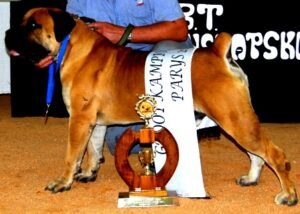
Born on 27 August 2005, Pavarotti was the son of Cabaret Straat-Kat and S.S. Kim. His recorded appraisal score was an impressive 93.3%.
At the South African National Boerboel Championships in Parys on 17 November 2007, Pavarotti won Senior Champion Male and Grand Champion Male.
Breeder Casper Labuschagne’s contemporary account describes Pavarotti’s success at the event, highlighting his movement and performance against mature male competitors.
Pavarotti’s significance extended beyond his championship achievements.
His offspring included Spitsvuur Ramkat, appraised at 94.7%, and Spitsvuur Siska, appraised at 82.7%. Both subsequently appeared in the ancestry of Tokara Tambo, a Boerboel recorded with an appraisal of 97.2%.
This connection illustrates how Pavarotti’s ancestry continued through multiple generations.
His name remains associated with an important period of Boerboel competition and breeding, when prominent dogs were becoming increasingly recognisable through documented pedigrees and championship results.
Avontuur Anton — A Bloodline Across Generations
Avontuur Anton occupies a distinguished position among the breeding animals whose ancestry can be traced through several generations.
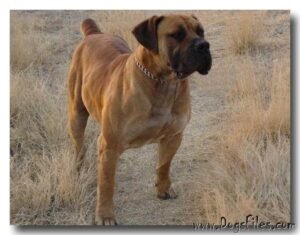 Born on 19 March 2001, Anton was the son of Corma Buks and Avontuur Poulien.
He received an appraisal score of 92.4%.
His recorded health information includes hip grading A-A and elbow grading 0-2.
Among Anton’s offspring was Groot Geluk Czapei, who continued the paternal line into subsequent generations.
Through Czapei and his descendants, Anton’s ancestry became represented in breeding programmes outside South Africa, including Australian pedigrees.
His significance lies in this documented continuation of his bloodline and the connections it established between successive generations of Boerboels.
Groot Geluk Czapei — Continuing the Anton Legacy
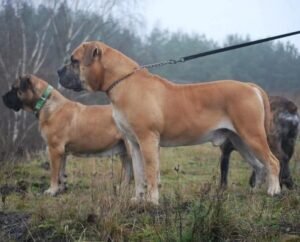
Groot Geluk Czapei was born on 18 June 2007, a son of Avontuur Anton and Blokkie Raisa.
He received an appraisal score of 92%, with recorded hip and elbow gradings of A-A and 0-0.
Czapei became an important link between the earlier Avontuur ancestry and later Groot Geluk breeding animals.
His recorded offspring included Groot Geluk Jaap and Groot Geluk Femoes.
Through these descendants, his pedigree continued into subsequent generations and breeding programmes.
Czapei demonstrates how the influence of an individual breeding animal may be understood not simply through its own appraisal but through the continuing presence of its ancestry.
Groot Geluk Jaap — A Recognisable Name in Modern Pedigrees
Groot Geluk Jaap, also known as Jaapie, was born on 26 January 2010.
His sire was Groot Geluk Czapei, while his dam was Mouzer Ysterberg Marinda.
Jaap received an appraisal score of 91.7%.
His registration records identify him under computer number 104752, with DNA profile identifiers H73645 and 254665.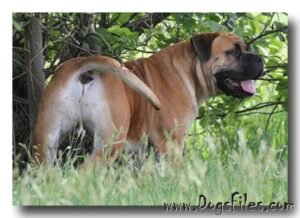
The paternal relationship between Avontuur Anton, Groot Geluk Czapei and Groot Geluk Jaap forms a clear three-generation line.
Jaap subsequently appeared in Australian pedigrees, including as the sire of Ataraxia Cash.
Through these relationships, the Groot Geluk line became part of the ancestry of later Australian Boerboels.
Jaap’s history highlights the international nature of modern Boerboel breeding and the importance of maintaining accurate pedigree records across countries.
The SABT National Champions
Meester Gunsmoke — 2009 National Grand Champion Male
The 2009 SABT National Boerboel Championship in Parys brought together distinguished competitors from across South Africa.
Among the most successful was Meester Gunsmoke, who received Grand Champion Male and Junior Champion Male.
His achievement established him as one of the principal male winners of that championship.
The event also recognised Meester Koevoet as Reserve Grand Champion Male and Senior Champion Male.
Among the females, Gretchen Jenny received Grand Champion Female and Senior Champion Female, while Great Lakes Mango received Reserve Grand Champion Female and Junior Champion Female.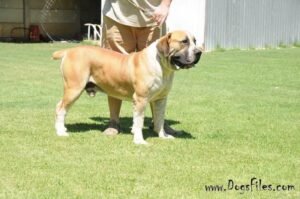
These names form part of the documented championship history of the Boerboel during the late 2000s.
The recognition of both junior and senior competitors illustrates the importance placed upon evaluating Boerboels at different stages of maturity.
Targus Pocket Money Cabaret — A Champion Through the Years
Targus Pocket Money Cabaret is another notable name in the history of SABT championship competition.
The 2009 results record Targus Pocket Money as Sub-Junior Champion Male.
At the 2011 SABT National Championship in Centurion, Targus Pocket Money Cabaret received Grand Champion Male and Senior Champion Male.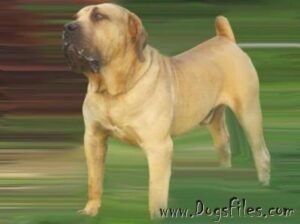
The 2011 championship records identify Lood Mienie as his owner.
His achievements across different age classes represent an interesting chapter in the competitive history of the breed.
The Targus and Cabaret bloodlines also appear in subsequent pedigrees, including the ancestry of Cabaret Son of a Gun.
Voorslag Karla — 2011 Grand Champion Female
The history of influential Boerboels is incomplete without recognising the females that distinguished themselves in competition and breeding.
At the 2011 SABT National Championship, Voorslag Karla received Grand Champion Female and Senior Champion Female.
The results identify Pieter J. van Rensburg as her owner.
The same event recognised Lötter Michelle as Reserve Grand Champion Female, while Exclusive Beyoncé received Junior Champion Female and Dog of the Year.
These achievements highlight the important place of female Boerboels within the breed’s championship history.
Breeding females are fundamental to the development of every kennel and bloodline. Their ancestry, temperament, construction and breeding qualities contribute equally to the next generation.
Piet-Zyn-Drift Kaptein Staal — 2012 National Champion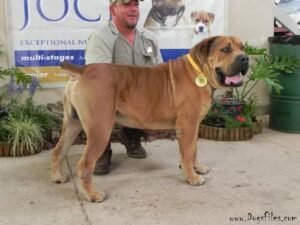
At the 2012 SABT National Boerboel Championship, held in Bloemfontein, Piet-Zyn-Drift Kaptein Staal received Grand Champion Male and Dog of the Year.
The championship also recognised Lötter Michelle as Grand Champion Female and Klein Sandfontein Yonatan as Reserve Grand Champion Male and Junior Champion Male.
Another notable competitor was Groenberg Rambo, who received Reserve Junior Champion Male.
These results preserve the achievements of several prominent Boerboels from the period and provide a valuable record of the animals recognised in national competition.
Notable Studs and Breeding Animals
Groenberg Rambo — A Name Carried Through Generations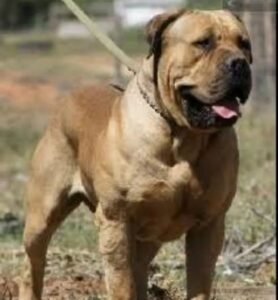
Few modern breeding animals illustrate the importance of pedigree history as clearly as Groenberg Rambo.
Born in 2011, Rambo was the son of Piet-Zyn-Drift Bastron I and Middelpos Tessa II.
He received an appraisal score of 92%.
His early show career included Reserve Junior Champion Male at the 2012 SABT National Championship. He was subsequently recognised as Grand Champion Male at the 2015 Mossel Bay Boerboel Show.
Rambo’s pedigree became particularly notable through his descendants.
His recorded offspring included Middelpos Alpha, Klein Sandfontein Huey, Middelpos Bismarc and Middelpos Stella.
Middelpos Alpha received an appraisal score of 97.9%, while Klein Sandfontein Huey appears in the ancestry of later breeding animals, including Klein Sandfontein Judge.
Rambo’s influence can also be observed in pedigrees that combine his ancestry with other distinguished breeding lines.
His continued presence across multiple generations makes him an important figure in the study of modern Boerboel pedigrees.
Cabaret Son of a Gun — A 95% Appraised Stud
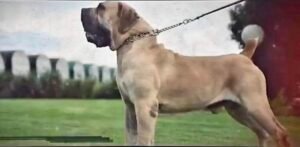
Cabaret Son of a Gun is another distinguished breeding male associated with the Cabaret bloodline.
Born on 27 February 2012, he was the son of Targus Pocket-Money 2 Cabaret and Cabaret Kara.
His appraisal score was an impressive 95%.
His recorded descendants include MES Askam and Targus Bom Boel.
Through MES Askam, the ancestry of Cabaret Son of a Gun continued into subsequent MES and other Boerboel breeding lines.
His place in the breed’s history is particularly interesting because it connects the Cabaret and Targus ancestry with later MES breeding animals.
The relationship between Cabaret Son of a Gun and MES Askam provides an example of how individual bloodlines can become recognised across generations.
MES Askam — A Distinguished Breeding Male
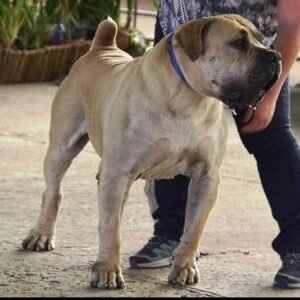
MES Askam is among the recognised names associated with the MES Boerboel breeding programme.
His sire was Cabaret Son of a Gun, appraised at 95%, and his dam was Trebla Lulu, appraised at 95.3%.
Askam himself received an appraisal score of 91.6%.
He is associated in breeder records with championship recognition in 2017, including the reported SABBS Dog of the Year distinction.
His breeding history is particularly noteworthy.
The 2019 SABBS National Show catalogue records several offspring of MES Askam, including MES Darlin, MES Sweet Caroline, Hashtag Thanos and Bostu Zazu.
Through these descendants, his ancestry continued into subsequent breeding generations.
Karin Pieterse is documented in the show records in association with MES Askam. The MES breeding history also brings attention to the work of breeders and owners who contributed to the development and recognition of these lines.
Askam’s importance is represented by both his individual appraisal and the continuing appearance of his ancestry in later pedigrees.
Jacob Mufasa — A Connection to the Jacob and Voorslag Lines
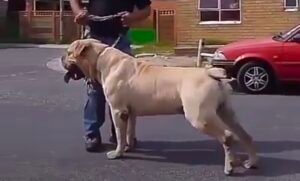
Jacob Mufasa is another Boerboel worthy of recognition within the modern pedigree record.
His recorded appraisal score was 86.3%.
He was the son of Jacob Bowls and Glen-Shee Kihara.
Through his paternal ancestry, Mufasa is connected to the Voorslag line, including Voorslag Stone and Voorslag Daisy.
His recorded offspring include Bastian Neveah, whose dam was Jacob Romy.
These pedigree relationships place Jacob Mufasa within the broader history of the Jacob and Voorslag breeding lines.
His inclusion illustrates how dogs with different appraisal scores and breeding backgrounds can contribute to the ancestry of subsequent generations.
Breker Meneer — A Recognisable Stud Register Male
Breker Meneer was born on 28 October 2015.
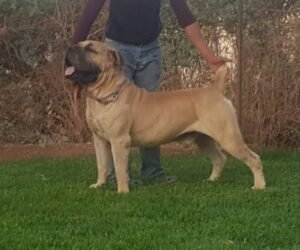
His sire was Voorslag Piksteel, appraised at 85.8%, and his dam was Breker Nella, appraised at 80.4%.
Meneer received an appraisal score of 85.1%.
His SABBS registration certificate records him as a fawn male, with DNA profile 394446 and Stud Register status.
His descendants include breeding animals recorded in later pedigrees, among them Breker Bella.
Breker Meneer’s ancestry also appears in subsequent pedigrees associated with other breeding programmes.
His history reflects the continuing importance of individual breeding males whose contributions are preserved through registered descendants.
Bosvlei Senings (Kokkie) — A Name Worth Preserving
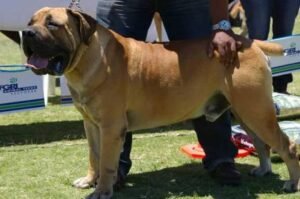
Bosvlei Senings, affectionately known as Kokkie, is another Boerboel whose name deserves a place in the broader discussion of the breed’s history.
The Bosvlei name forms part of South African Boerboel breeding heritage, and Kokkie is included here in recognition of the importance of preserving the identities of individual dogs remembered by breeders and enthusiasts.
The history of a breed is not recorded solely through championship winners or exceptionally high appraisal scores. It is also preserved through the names of breeding animals and the recollections of those familiar with them.
Recognising Kokkie alongside other notable Boerboels helps ensure that such names remain part of the conversation as the breed’s history continues to be documented.
Australian Boerboels — Preserving International Bloodlines
As the Boerboel gained recognition beyond South Africa, breeders in other countries began establishing programmes that incorporated South African ancestry alongside locally bred generations.
Australia became part of this international development.
The history of Australian Boerboels includes breeding animals associated with the Ataraxia, Avalonia, Dandaloo, Mouzer Ysterberg and other lines.
These dogs form part of the ancestry of Boerboels bred in Australia today.
Maestro Napoleon — An Ancestor in Australian Boerboel History
Maestro Napoleon is among the breeding animals whose ancestry became represented in Australian Boerboel pedigrees.
He received an appraisal score of 86.4%.
His ancestry appears in the pedigree of Ataraxia Kiara through Ataraxia Uno.
Maestro Napoleon is also identified as the sire of Ataraxia 007, establishing another connection between his bloodline and Australian Boerboel breeding.
Through these relationships, Maestro Napoleon’s ancestry continued into later generations.
His inclusion recognises the role of earlier breeding animals whose descendants became part of the Australian Boerboel population.
Ataraxia 007 — Continuing the Maestro Napoleon Bloodline
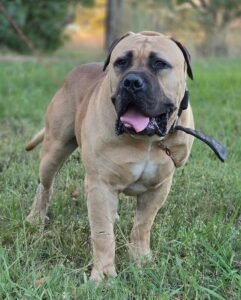
Ataraxia 007 is another Boerboel whose ancestry forms part of the history of Australian breeding programmes.
A son of Maestro Napoleon, Ataraxia 007 represents a direct continuation of the Maestro bloodline within the Australian Boerboel population.
His inclusion highlights the importance of recognising not only the earlier breeding animals but also the generations that followed them.
Australian Boerboel history has developed through the preservation and continuation of established bloodlines, with locally bred animals contributing to subsequent generations.
Ataraxia 007 represents one of these connections, linking the Maestro Napoleon ancestry to the wider history of Australian Boerboel breeding.
Together, Maestro Napoleon and Ataraxia 007 illustrate the importance of preserving parentage and pedigree information as the breed continues to develop internationally.
Avalonia Waldor — A Connection to the Ataraxia Line
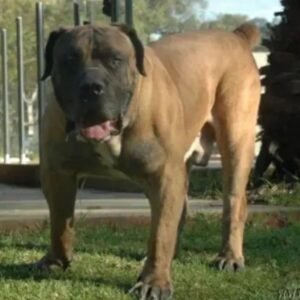
Avalonia Waldor received a recorded appraisal score of 82.1%.
He appears as the sire of Ataraxia Zula, whose dam was Ataraxia Kiara.
The relationship connects the Avalonia and Ataraxia breeding lines through a documented offspring.
His inclusion reflects the contribution of breeding animals whose ancestry continues through Australian pedigrees.
Dandaloo Mack — A Recorded Australian Breeding Male
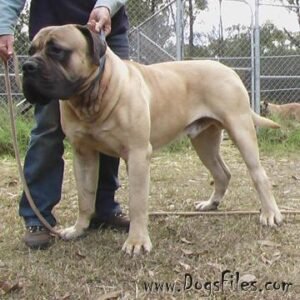
Dandaloo Mack is recorded with an appraisal score of 88.1%.
He was the sire of Ataraxia Kiara, whose ancestry continued through subsequent Ataraxia breeding animals.
His inclusion reflects his place in the development of recorded Australian Boerboel pedigrees.
The relationship between Dandaloo Mack, Ataraxia Kiara and subsequent generations provides another example of the connections that have shaped Australian breeding programmes.
Ataraxia Snowy — A Recognised Australian Stud
Ataraxia Snowy received an appraisal score of 91.2%.
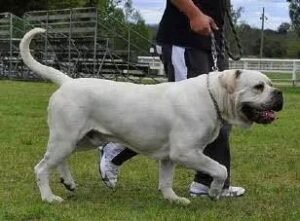
He appears as the sire of Ataraxia Pug, whose ancestry continued through later Ataraxia Boerboels, including Ataraxia Dutch.
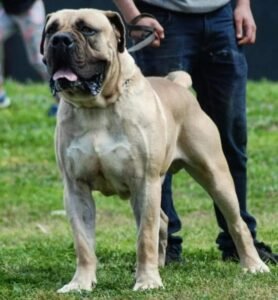
Snowy’s name represents another connection between earlier Australian breeding animals and subsequent generations.
His pedigree illustrates the continuing importance of preserving the ancestry of dogs that contributed to the development of established Australian breeding lines.
Mouzer Ysterberg Adolf — A Connection to South African Ancestry
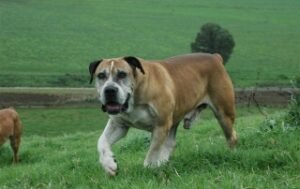
Mouzer Ysterberg Adolf, also recorded as Ysterberg Mouzer Adolf, appears within the wider Mouzer and Ysterberg ancestry.
He is recorded as the sire of Mouzer Ruby.
The relationship provides another example of the South African ancestry represented within later breeding lines.
His inclusion recognises the continuing presence of the Mouzer and Ysterberg names in the historical pedigree record.
Ataraxia Kaizen Beast of Bourbon — Part of Australia’s Boerboel Story
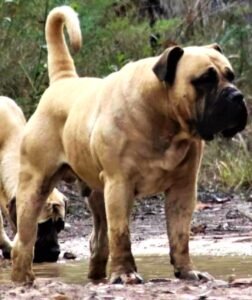
Ataraxia Kaizen Beast of Bourbon is among the Australian Boerboels identified for recognition in the modern breed’s history.
The Ataraxia and Kaizen names form part of the wider landscape of Australian Boerboel breeding, reflecting the development of breeding programmes that have incorporated both imported ancestry and Australian-bred generations.
Together with the other Australian Boerboels featured in this article, Beast of Bourbon represents the importance of recognising the breed’s development beyond its South African origins.
The Modern SABBS International Champions
Gunsmoke Maya — 2022 International Grand Champion Female
The modern SABBS International Show continues the tradition of recognising distinguished Boerboels through formal competition.
At the 2022 SABBS International Show, Gunsmoke Maya, owned by Chadwin Fischer, received Grand Champion Female, Senior Champion Female and Dog of the Day.
Her achievements made her one of the outstanding competitors of the event.
The same championship recognised Font Boerboels Silver Bullet as Grand Champion Male and Senior Champion Male.
Other notable competitors included Pampoenkraal Apocalypse, Reserve Grand Champion Male, and Malakas Stella, Reserve Grand Champion Female and Junior Champion Female.
These achievements form part of the modern championship history of the breed.
Font Boerboels Silver Bullet — 2022 Grand Champion Male
Font Boerboels Silver Bullet was awarded Grand Champion Male and Senior Champion Male at the 2022 SABBS International Show.
The official results identify Neville Comley as his owner.
His achievement placed him among the distinguished senior male competitors of the modern SABBS era.
Together with Gunsmoke Maya and the other winners of the 2022 championship, Silver Bullet represents a more recent generation of recognised Boerboels.
Pinnacle Sloet — 2024 International Grand Champion Male
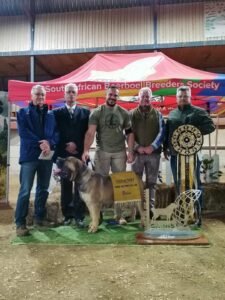
Pinnacle Sloet achieved major recognition at the 2024 SABBS International Show.
He received Grand Champion Male and Dog of the Day.
The official championship results identify A. Bruyns as his owner.
Sloet’s success places him among the notable contemporary champions of the Boerboel.
His recognition also illustrates the continuing importance of organised championship competition in evaluating and celebrating the breed.
La Boela Gigi — 2024 Grand Champion Female
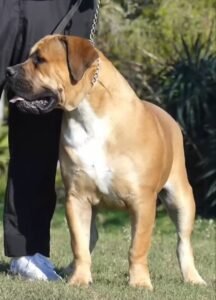
La Boela Gigi was awarded Grand Champion Female and Junior Champion Female at the 2024 SABBS International Show.
Her achievements placed her among the distinguished female competitors of the event.
Other recognised females included Bostu Bellanique, Reserve Grand Champion Female and Senior Champion Female.
Gigi’s success demonstrates the continuing prominence of female Boerboels within modern championship competition.
Beyond Championships — What Makes a Boerboel Truly Notable?
The history of these Boerboels raises an important question: what makes an individual dog truly notable?
For some, the answer lies in championship achievements. A national grand championship represents recognition of a dog’s qualities under the judges and competition standards of its time.
For others, distinction comes through appraisal.
The Boerboel appraisal system evaluates individual animals against the breed standard, providing a structured assessment of characteristics including construction, movement and temperament.
Yet neither a championship title nor an appraisal score tells the complete story.
A breeding animal’s influence is also reflected in its descendants.
Some dogs become widely represented in pedigrees, while others contribute to particular breeding programmes or bloodlines.
The importance of those contributions must ultimately be considered alongside health, temperament, structural soundness and genetic diversity.
A dog with a high appraisal percentage is not automatically a superior breeding animal, just as a dog with a more modest appraisal may still occupy a meaningful place in the ancestry of later generations.
The preservation of pedigree information allows breeders to understand these relationships and make more informed breeding decisions.
It also ensures that the names of earlier generations are not lost as new champions emerge.
The Importance of Genetic Diversity
The recognition of influential breeding animals also provides an opportunity to consider the importance of genetic diversity.
As certain dogs become highly regarded, their descendants may become increasingly represented in subsequent generations.
This can help preserve desirable characteristics, but excessive reliance on a limited number of ancestors may also reduce genetic diversity within a breeding population.
Responsible breeding therefore requires consideration of more than individual appraisal scores or championship achievements.
Health, temperament, soundness, pedigree diversity and the long-term welfare of the breed remain essential considerations.
The history of notable Boerboels provides valuable context for understanding these responsibilities.
Preserving the History of the Boerboel
The Boerboel’s development has been shaped by many breeders, kennels and individual dogs.
Organisations such as SABT/SABBA and SABBS have contributed to preserving that history through registration, appraisal and championship records.
Pedigree archives, registration certificates and historical show catalogues provide further insight into the connections between generations.
These records are particularly valuable as the breed continues to develop internationally.
For breeders in Australia, Europe, North America and elsewhere, understanding the ancestry of modern Boerboels provides a connection to the South African breeding programmes from which many of their dogs descend.
Preserving this history is not simply an exercise in recognising famous names.
It is an opportunity to acknowledge the dedication of earlier breeders, understand the relationships between bloodlines and appreciate the generations of dogs that contributed to the Boerboels we know today.
The preservation of individual histories, including those of lesser-known breeding animals, is equally important.
Every registered pedigree, appraisal record, championship result and breeding history contributes another piece to the broader story of the South African Boerboel.
Conclusion — Honouring the Boerboels That Came Before
From Cabaret Pavarotti and Avontuur Anton to Groenberg Rambo, Cabaret Son of a Gun, MES Askam, Breker Meneer and Bosvlei Senings (Kokkie), the modern history of the Boerboel is filled with individuals whose names deserve to be remembered.
National champions such as Meester Gunsmoke, Targus Pocket Money Cabaret, Piet-Zyn-Drift Kaptein Staal, Gunsmoke Maya, Pinnacle Sloet and La Boela Gigi remind us of the achievements recognised through organised competition.
Breeding animals such as Groot Geluk Czapei, Groot Geluk Jaap and Jacob Mufasa illustrate how ancestry continues through subsequent generations.
Australian Boerboels, including Maestro Napoleon, Ataraxia 007, Avalonia Waldor, Dandaloo Mack, Ataraxia Snowy and those associated with the Mouzer Ysterberg and Kaizen lines, represent the continuation of the breed’s history beyond South Africa.
Each contributes a different part of the story.
Some are remembered for their success in the show ring. Others are recognised through appraisal records, distinguished descendants or their place in important pedigrees.
Together, they represent the dedication, ambition and continuing efforts of Boerboel breeders across generations.
The dogs presented here are only a selection of those deserving recognition. Many other Boerboels have undoubtedly contributed to the development of the breed, and their stories remain equally worthy of preservation.
By concentrating on individuals supported by the historical information available, this article seeks to provide a meaningful starting point for celebrating the breed’s history while acknowledging the many remarkable dogs not featured.
The purpose of recognising these Boerboels is not to declare one bloodline or kennel superior to another. It is to celebrate the history of the breed and acknowledge the animals and people whose contributions helped shape its development.
The legacy of a notable Boerboel extends beyond its own lifetime. It lives on through its descendants, the breeders who preserve its ancestry and the generations who continue to carry the breed forward.
Historical Sources and References
The following references include historical championship publications, registration certificates, pedigree records and breeder histories.
Breed History and Championship Records
- South African Boerboel Breeders’ Society — History: https://www.sabbs.co.za/about-8
- SABT 2009 National Championship: https://www.yumpu.com/en/document/view/10723163/tewe-females-klas-class-a-sabt
- SABT 2011 National Championship: https://www.yumpu.com/en/document/view/10723082/results-sabt
- SABT 2012 National Championship: https://www.yumpu.com/en/document/view/13944910/results-and-sponsorship-acknowledgements-sabt
- SABBS 2019 National Show Catalogue: https://pubhtml5.com/qqij/wmmf/basic/
- SABBS 2022 International Show Results: https://pubhtml5.com/njsec/ytvo/basic/
- SABBS International Show: https://www.sabbs.co.za/internationalshow
- SABBS 2024 International Show Results: https://www.sabbs.co.za/_files/ugd/af9354_8316abcf7faf45598e8a03cbc1f35eb1.pdf
Individual Dogs and Pedigree Histories
- Cabaret Pavarotti: https://www.boerboels.com/pedigree/pedigree.php?K_ID=26&S_ID=5882
- Spitsvuur historical show records: https://spitsvuurboerboels.wordpress.com/shows/
- Guardian Boerboels — Pavarotti descendants: https://guardianboerboels.com/our-males/
- Avontuur Anton and Groot Geluk Czapei: https://www.immermoed.com/wp-content/uploads/2013/04/Pedigree_2008100292011_Groot-Geluk-Freud.pdf
- Groot Geluk Jaap pedigree: https://www.boerboels.com/pedigree/pedigree.php?K_ID=936&S_ID=42583
- Groot Geluk Jaap registration ancestry: https://storage.googleapis.com/production-gator-v1-0-6/176/584176/YQVhg1H1/ddea9d4d4d4946b49c3c70f39c6d08cd?fileName=Ayanda+registration+new.pdf
- Groenberg Rambo descendants: https://dogs.pedigreeonline.com/groenberg-rambo-X5c2j8Jl/offspring
- Cabaret Son of a Gun registration: https://bostuboerboels.com/wp-content/uploads/2025/01/BOSTU-SHOW-GUN.pdf
- MES Askam pedigree: https://www.boerboels.com/pedigree/pedigree.php?K_ID=1944&S_ID=46074
- MES Askam breeder history: https://bosguardboerboels.com/males/
- Jacob Mufasa: https://www.boerboels.com/pedigree/pedigree.php?K_ID=2147&S_ID=46798
- Breker Meneer registration: https://grootboerboels.com/wp-content/uploads/2023/03/Breker-Meneer-1.pdf
- Ataraxia Zula ancestry: https://www.boerboels.com/pedigree/pedigree.php?K_ID=1929&S_ID=46922
- Ataraxia Snowy ancestry: https://www.boerboels.com/pedigree/pedigree.php?K_ID=158&S_ID=50594
- Mouzer Ysterberg Adolf: https://boerboels.com/pedigree/pedigree.php?K_ID=945&S_ID=54621
Editorial Note
This article is a selective historical tribute, not an exhaustive register or ranking of Boerboels.
Championship results for 2009, 2011, 2012, 2022 and 2024 are supported by published show records. Cabaret Pavarotti’s 2007 championship is described in a contemporary breeder account. MES Askam’s 2017 Dog of the Year distinction is reported in breeder material.
Individual appraisal scores and pedigrees are drawn from registration documents and pedigree archives. The parentage of Ataraxia 007 as a son of Maestro Napoleon has been included as supplied for this article; independent documentary confirmation is not established in the listed references.
Bosvlei Senings (Kokkie) and Ataraxia Kaizen Beast of Bourbon are recognised by name without assigning undocumented individual achievements.
Many other Boerboels have contributed to the breed’s development, and their histories deserve equal consideration as further records become available.
The intention of this article is to celebrate notable Boerboels and preserve an appreciation of their place in the breed’s continuing history.