Linebreeding or Outcrossing: Which Is Best for Dog Breeding?
In the world of purebred dog breeding, and particularly in breeds such as the Boerboel, the question of whether to linebreed or outcross is more than a matter of tradition—it reflects underlying genetic principles, breeding philosophy, and long-term breed health. Informed decisions in this domain hinge on both practical experience and scientific understanding of genetics, inbreeding, and population management.
Breeding Philosophy: Setting the Framework
The first and most critical step in any breeding program is defining purpose: Why are we breeding? Whether the objective is to refine temperament, fix functional traits, uphold breed standards, maintain genetic health, or produce predictable working ability, the breeder’s philosophy drives strategic choices. Without clear goals and metrics, mating decisions lack direction and are unlikely to produce sustained improvement.
Linebreeding: Fixing Traits Through Genetic Concentration
Linebreeding is a form of controlled inbreeding that aims to concentrate the genetic influence of a particular superior ancestor. Unlike close inbreeding (e.g., parent-offspring or full siblings), linebreeding generally uses more distant relatives (e.g., cousins, great grandparents) to maintain manageable levels of relatedness while elevating desired traits.
Genetic Basis and Benefits
Trait Predictability: By increasing homozygosity around genes of interest, linebreeding can make offspring more predictable for desired traits. This is particularly useful when a breeder wants to consolidate structural soundness, temperament, or functional ability.
Fixation of Desirable Alleles: Through repeated selection, favourable alleles become more prevalent in the line. This is how distinct bloodlines with consistent type and performance have historically been developed.
However, linebreeding is not without risk. Genetic theory and empirical studies demonstrate that increased homozygosity can also expose deleterious recessive alleles, contributing to inbreeding depression—manifested as reduced fertility, smaller litters, diminished immune function, and potentially shorter lifespans.
The Genetic Cost of Linebreeding
Inbreeding Depression: Elevated inbreeding coefficients (COI) have been correlated with declines in general health and reproductive performance in dogs and other species.
Loss of Diversity: Pedigree and genomic studies reveal that many dog breeds already exhibit limited genetic diversity due to closed studbooks and historical bottlenecks.
Outcrossing: Introducing Fresh Genetic Variation
Outcrossing refers to mating unrelated or distantly related individuals. Within a breed, this can mean combining separate lines; across breeds, it involves introducing new founder diversity.
Hybrid Vigor and Genetic Health
Outcrossing increases heterozygosity—i.e., the presence of different alleles at gene loci—which can:Reduce Expression of Recessive Disorders: By mixing gene pools, deleterious recessive alleles are less likely to pair.
Enhance Vitality: Many breeders observe improved fertility, robust growth, and resilience in outcrossed offspring—phenomena consistent with what geneticists refer to as heterosis or hybrid vigor.
However, this benefit is context-dependent. Genetic modelling and simulation studies in highly inbred populations indicate that a single outcross followed by intensive backcrossing often dilutes the initial benefit, and may have limited long-term impact on reducing inbreeding unless such crosses are sustained consistently.
Tradeoffs of Outcrossing
Unpredictability: Introducing new genetic material can lead to broader variation in offspring phenotype, making it harder to reliably retain breed-specific traits.
Dilution of Line Type: Without careful management, desirable breed attributes may be weakened if outcrossing is overused.
Integrated Strategies: Alternating Linebreeding and Outcrossing
Rather than viewing linebreeding and outcrossing as mutually exclusive, many successful breeding programs alternate between them strategically. For example:
Linebreed to consolidate traits, then
Introduce a calculated outcross to infuse diversity, and
Backcross into the line while managing COI carefully to retain desirable traits.
This approach balances the predictability of linebreeding with the genetic health advantages of outcrossing—but it requires meticulous pedigree analysis and long-term planning.
Population Genetics Considerations
Even with conscientious breeding practices, closed populations are inherently at risk of narrowing genetic diversity over time. Pedigree and DNA analyses across breeds confirm that many purebred dogs have lost a significant proportion of their ancestral diversity due to historical selection and breed isolation.
To mitigate this, breeders may incorporate:
Genomic tools for measuring COI and genetic diversity.
Health testing to avoid mating carriers of known recessive disorders.
Collaborative outcrosses across lines, guided by objective genetic goals rather than convenience or fashion.
Conclusion: No Single Best Answer
There is no universally best breeding strategy. Linebreeding and outcrossing each have:
Clear genetic foundations and tradeoffs,
Situational advantages, and
Risks that must be managed with informed planning.
For breeders committed to improving the Boerboel—or any purebred dog—the optimal path lies in clarity of purpose, genetic literacy, and strategic use of both linebreeding and outcrossing according to defined goals.
Breeder success should be judged not by ideology, but by outcomes sustained across generations: healthy, functional, temperamentally sound dogs that exemplify the best of the breed.
Written By Karim Ahmed owner of Al Aseel Boerboels 2026
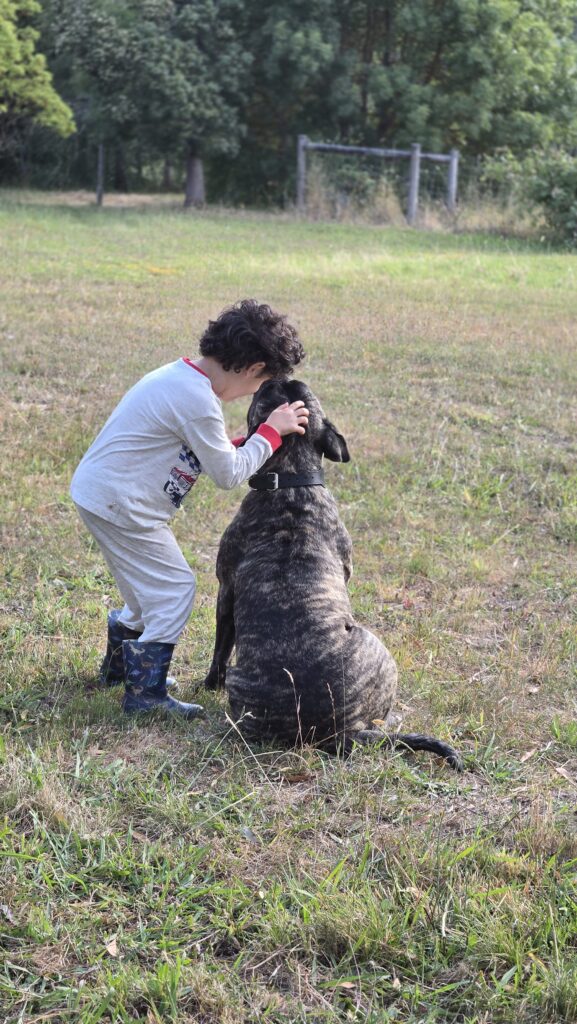
The original breed standard, which was written in 1983 said, “He must be a resolutely good watchdog for all to see and loving towards the family with a special liking / preference for children.”